

Many US companies try to sell in Latin America the same way: they run the site through a translator, publish it on a subdomain and wait for orders. Three months later, the project is filed under "it didn't work abroad."
What works is something else entirely. It's a single foundation with local layers: the same catalog, the same operation, but with language, currency, social proof, and messaging adjusted for each market.
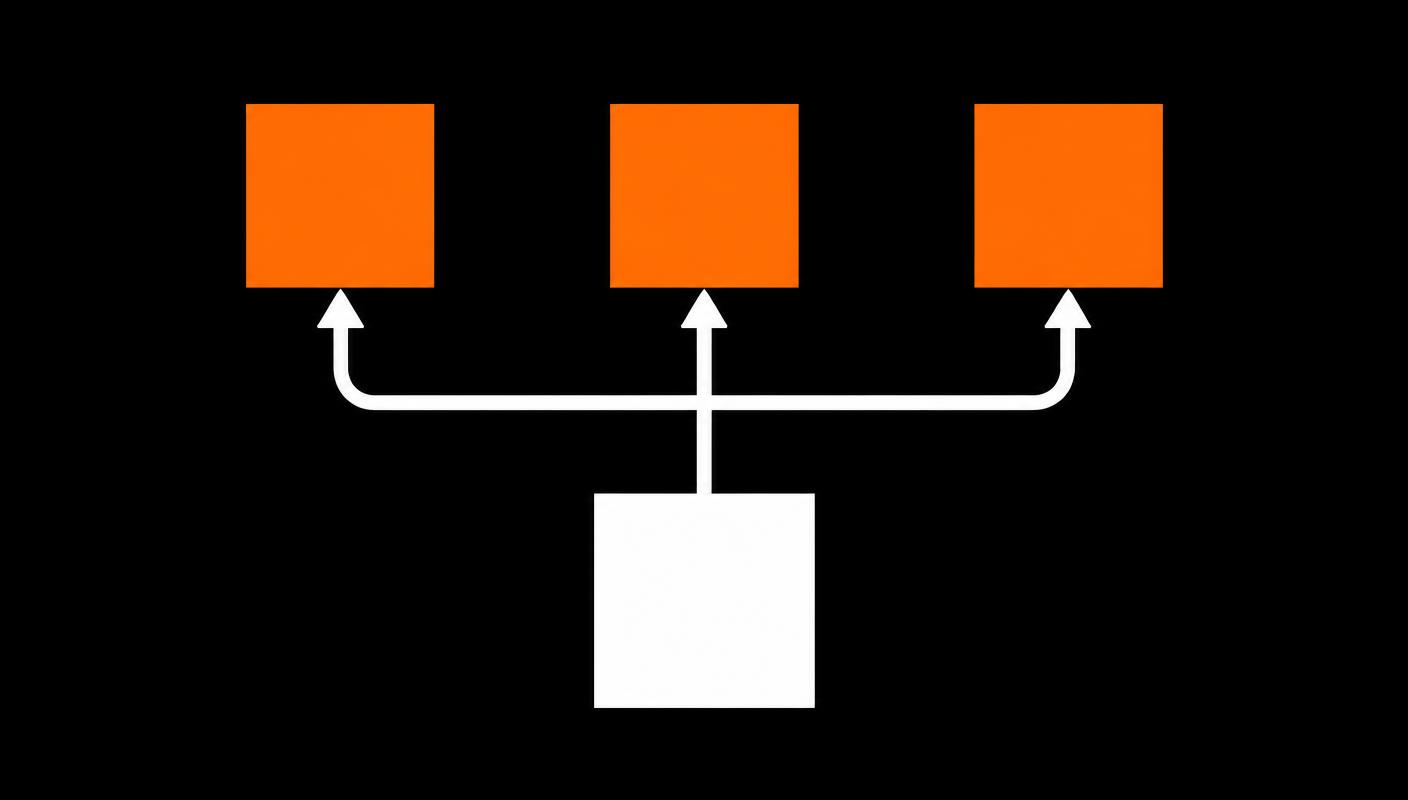
Separate Global from Local
Global is what doesn't change: product structure, purchase flow, identity, delivery process. Local is what needs to change: language, price, payment method, cultural references, examples, tax documents, and customer service hours.
Rule number one
Prices are not converted by exchange rates. They are defined by market, competition, and local perceived value. Converting Brazilian Reals to USD at the daily rate is the fastest way to be either too expensive or too cheap.
The Four Pillars of Multi-Market Operation
- Content per market. Each country has its own repository of pages and articles, with its own address and meta tags. No single text translated into three variations.
- Native pricing. A price table per currency, with a fixed and legible value — never a broken number from an automatic conversion.
- Local social proof. Customer from the country, case study from the country, testimonial in the country's language. Foreign proof generates distrust.
- Customer service in the local time zone. Responses during local business hours. A one-business-day delay kills international sales.
Literal Translation is a Commercial Risk
An argument that sells in Brazil might sound aggressive in Chile and vague in the United States. The job isn't to translate phrases: it's to re-write the promise addressing the real pain point of that market, using the words people there type into search engines.
| Layer | Brazil | Chile | United States |
|---|---|---|---|
| Currency | Real | Chilean Peso | Dollar |
| Core Argument | Quick return | Trust and stability | Scale and efficiency |
| Preferred Channel | WhatsApp and email | Email and online scheduling | |
| Decisive Proof | Case study with numbers | Well-known reference | Auditable data |
What weighs most in international conversion
Internationalization from the US: where to start
For a US company, the closest second market is often already inside the country: Spanish-speaking customers at home. Serving them well is a smaller step than opening another country, and it tests the same layers this article describes: content written in Spanish instead of translated, support in that language, and proof from customers like them.
Going into Latin America adds two decisions. Price: a US price converted at the day's exchange rate is usually out of range for the local market, so each country needs its own table. Language: Brazil speaks Portuguese, not Spanish, and Spanish itself changes from Mexico to Argentina. Start with one country, get one local case, and only then copy the structure to the next.
Roadmap for Entering a New Market
- Weeks 1–2: Choose three offers with the highest local potential and define native pricing.
- Weeks 3–5: Publish market-specific pages with their own address, meta tags, and content written in the local language.
- Weeks 6–8: Activate test media and a customer service channel in the correct time zone.
- Weeks 9–12: Collect the first local case study and make it the main proof point on the page.
Expensive mistake
Opening three markets at the same time without having one operating successfully. Prove the model in one country, then replicate the structure — it's already built.
Ten-minute check: does your website show prices in the visitor's currency, have a page with a unique address per country, and visible local case studies? If any item is missing, the operation is still national with an accent.
Next step
Open a new market with the structure already set up
Catalog in three languages, pricing in three currencies, and content per country — with a closed scope and defined timeline.
View internationalization servicesTo gain authority in the new market, start with backlink packages for that country. To accelerate local content production, use the materials and playbooks. And to design the complete market entry, talk to PRESS.


